
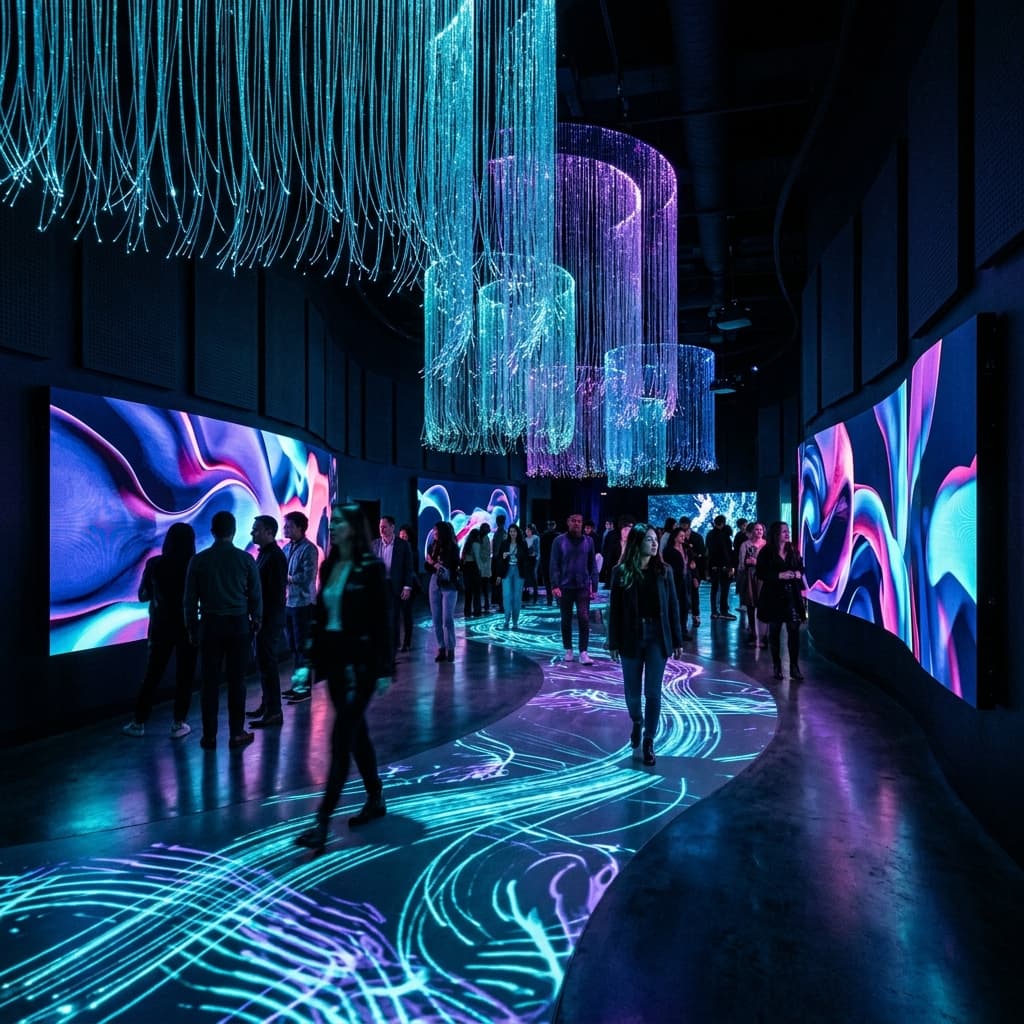
Every experiential agency has experienced this moment. The creative concept has been approved. The client is excited. The production schedule has been locked. The venue has been confirmed. Design teams are refining the visitor journey while production managers begin coordinating logistics, fabrication, and installation.
Then someone asks the question that often determines whether the activation becomes an unforgettable brand experience or an expensive operational challenge:
"Who's building the interactive experience?"
For many agencies, this is where creativity meets execution. Modern event activation rarely relies on physical environments alone. Interactive technologies such as touch applications, immersive storytelling, augmented reality, virtual reality, motion recognition, RFID, LED ecosystems, and AI-powered experiences have become valuable tools for engaging audiences and supporting measurable business objectives.
However, integrating these technologies successfully requires far more than software development. It requires a technology partner who understands how interactive experiences behave inside real event environments.
Unlike traditional digital products, live activations operate under unique conditions. They have fixed opening dates, limited setup windows, complex venue requirements, multiple stakeholders, and audiences who expect every interaction to work from the very first visitor to the last. There is no opportunity to "fix it next week." When the doors open, the experience must perform.
For experiential agencies, selecting a technology partner is therefore not simply a procurement decision. It is a strategic partnership that influences creativity, production, visitor engagement, operational reliability, and ultimately, client satisfaction.
Why Technology Partnerships Have Become a Strategic Decision
Experiential marketing has evolved significantly over the past decade. Visitors no longer expect to simply observe a brand. They expect to interact with it. Whether attending a trade show, product launch, public exhibition, museum installation, corporate event, or experience center, audiences increasingly look for experiences that are engaging, intuitive, and worth sharing.
As those expectations have grown, so has the complexity of delivering successful activations. Today's projects often involve a combination of physical construction, digital content, interactive software, sensors, networking, audiovisual systems, and operational planning. Each discipline may be managed by a different specialist:
Creative agencies develop the concept. Production companies coordinate fabrication and logistics. AV partners supply displays and hardware. Venue teams oversee installation requirements. Technology partners develop the interactive layer that brings the experience to life.
When these disciplines collaborate effectively, visitors experience a seamless journey. When they do not, even the strongest creative ideas can struggle to achieve their full potential. That is why agencies increasingly involve technology specialists during the planning phase rather than after creative concepts have already been finalized.
Early collaboration allows technical feasibility, visitor interaction, deployment requirements, and production timelines to evolve together instead of competing with one another. The result is a stronger experience not because more technology has been added, but because every decision supports the same objective.
"Technology should never be introduced simply because it is available. The most effective interactive experiences begin with a business objective, followed by the visitor journey, and only then the selection of technology that best supports both."
The Shift from Vendors to Technology Partners
One of the biggest changes within experiential marketing is the role technology companies now play. Historically, agencies often engaged software developers after creative concepts had already been approved. The expectation was straightforward: "Build exactly what has been designed."
Today, that approach is becoming less effective. Interactive experiences influence visitor behavior, operational workflows, accessibility, hardware selection, installation planning, and long-term maintenance. As a result, agencies increasingly seek partners who contribute to strategic thinking alongside technical execution.
The distinction is important: A vendor completes assigned tasks. A technology partner helps agencies make informed decisions before development begins.
- Who is the primary audience?
- What behavior should the experience encourage?
- How long is the average visitor interaction?
- What operational constraints exist at the venue?
- How will success be measured?
- Which technology creates the simplest and most effective visitor journey?

The Cost of Choosing the Wrong Partner
When agencies evaluate outsourcing partners, price is often one of the easiest factors to compare. It is also one of the least informative.
Interactive event technology exists within a live production environment where timelines are fixed, stakeholders are numerous, and expectations are high. A lower development quote may appear attractive initially, but if the partner lacks experience with live experiential projects, the hidden costs often emerge elsewhere. These can include:
- Extended revision cycles due to unclear discovery.
- Late identification of technical constraints.
- Poor coordination with production teams.
- Inadequate testing before deployment.
- Last-minute changes that increase project pressure.
- Reduced confidence during installation and live operation.
"Experienced technology partners focus on reducing uncertainty throughout the project. They ask more questions during discovery, identify risks earlier, and build solutions that align with operational realities rather than ideal conditions."
The Seven Qualities of a Great Interactive Event Technology Partner
Not every interactive technology partner delivers the same value. Some focus primarily on software development. Others specialize in hardware integration or creative technology. While technical expertise is essential, agencies benefit most from partners who understand the complete lifecycle of an experiential project—from discovery workshops to deployment and post-event support.
When evaluating a potential partner, consider these seven qualities:
- 1. They Begin with Questions, Not Technology — They start by understanding project goals, audience, and constraints before recommending VR, AR, or touchscreens.
- 2. They Understand Live Event Environments — They design for physical lighting, visitor flow, tight setup windows, and hardware reliability.
- 3. They Collaborate Across Disciplines — They communicate seamlessly with creative agencies, fabricators, AV specialists, and venue managers.
- 4. They Recommend the Right Technology, Not the Most Technology — They prioritize visitor experience and practicality over unnecessary complexity.
- 5. They Prioritize Reliability — They invest heavily in pre-deployment testing and rehearsals so performance is flawless on opening day.
- 6. They Think Beyond Launch Day — They assist with on-site support, content updates, troubleshooting, and post-event analytics.
- 7. They Strengthen Agency Relationships — They empower agencies to expand capabilities while protecting client trust, whether working transparently or white-label.
"Technology should never become the attraction. It should make the brand story more engaging, easier to understand, and more memorable."
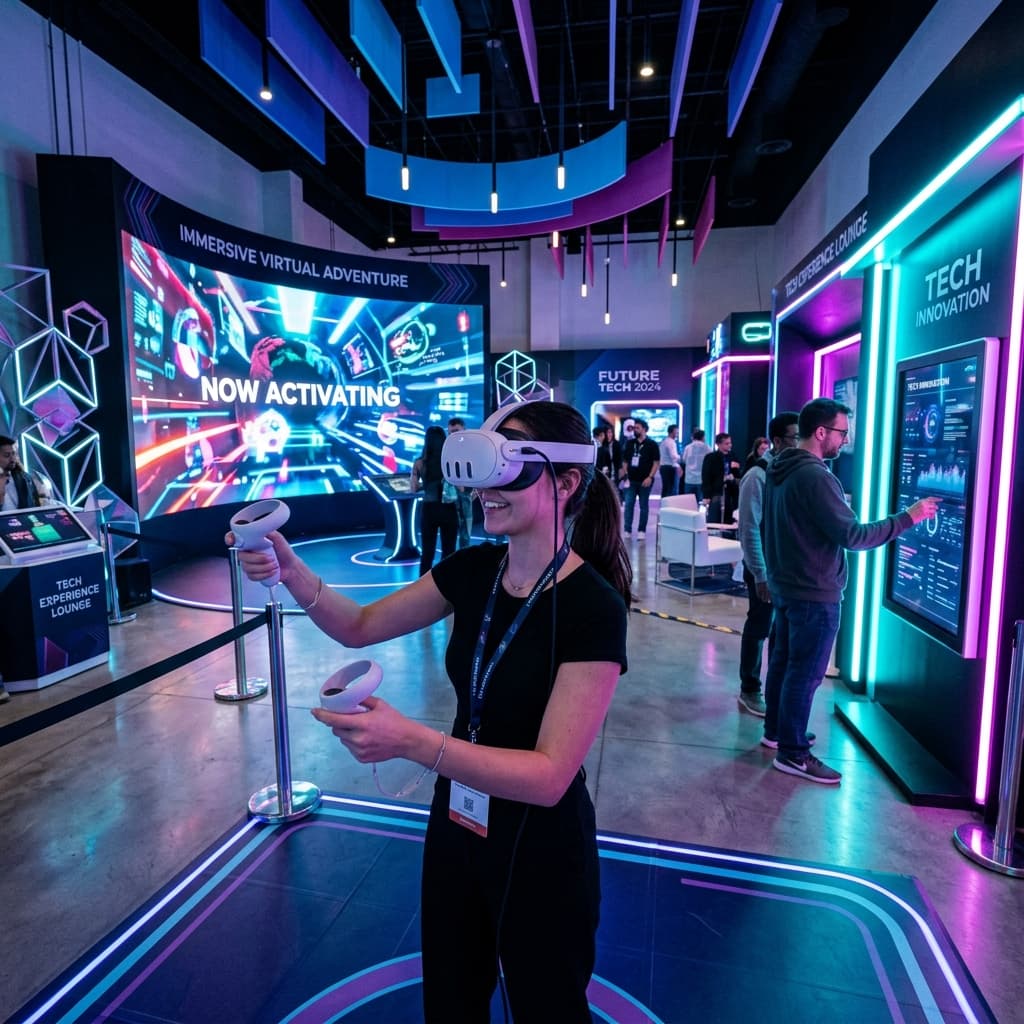
Five Common Mistakes Agencies Can Avoid
Even well-planned activations encounter challenges. Many of them are preventable:
- Waiting Too Long to Involve Technology — Bringing technical specialists early creates more flexibility throughout the project.
- Selecting Technology Before Defining Objectives — Business goals should always guide technology decisions, not novelty.
- Underestimating Testing — Functional testing, hardware validation, user testing, and deployment rehearsals all build confidence on opening day.
- Ignoring Operational Reality — Planning for continuous public interaction and operational reliability is just as vital as visual impact.
- Treating Technology as an Isolated Discipline — The strongest activations succeed when technology, creative direction, production, and operations evolve together.
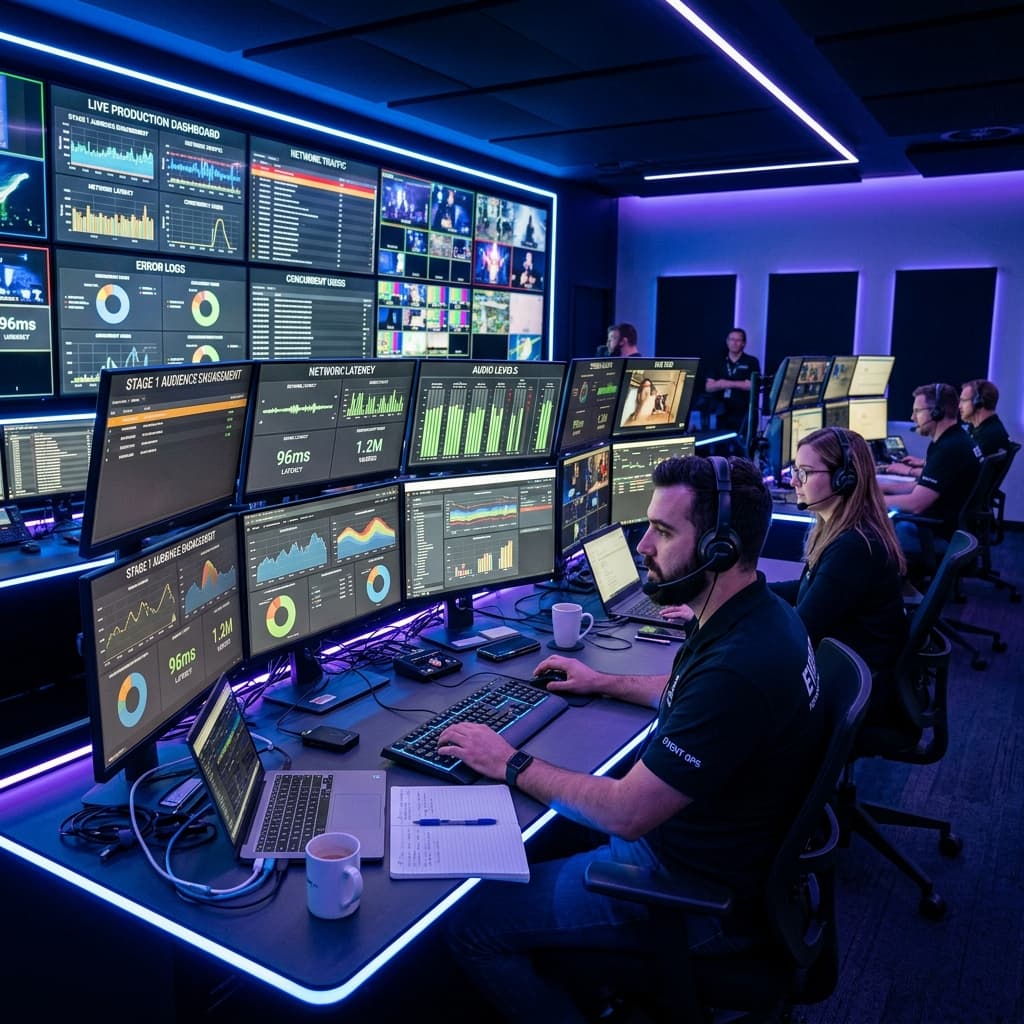
Lessons from Real-World Activations
Across a decade of delivering immersive experiences, one principle has remained consistent:
Visitors rarely remember the technology. They remember how the experience made them feel.
Projects such as AO Interactive's work supporting immersive experiences for Formula 1 Saudi Arabia, KFUPM Interactive Graduation Ceremony, and digital engagement initiatives for the Human Rights Commission demonstrate this principle in practice.
Although the objectives, audiences, and environments differed, both projects required thoughtful planning, technical execution, and close collaboration with multiple stakeholders. Technology is most effective when it quietly supports the experience rather than competing with it.
"Great technology creates confidence behind the scenes and memorable moments in front of the audience. When both happen simultaneously, visitors rarely think about the software at all."
Building Better Partnerships
Technology has become an essential component of modern experiential marketing, but successful activations are never defined by technology alone. They are defined by how effectively every discipline works together to achieve a shared objective.
Creative teams shape ideas. Production teams build environments. Technology teams engineer interaction. When those efforts remain aligned from discovery through deployment, agencies create experiences that are memorable for audiences and dependable for clients.
That alignment is what transforms a collection of technologies into a meaningful brand experience.
Explore Referenced Case Studies
Formula 1 Saudi Arabia
Immersive VR & AR activations for high-speed audience engagement at the Jeddah Corniche Circuit.
KFUPM Interactive Graduation Ceremony
Large-scale interactive portal and custom digital presentation ecosystem for thousands of attendees.
Human Rights Commission
Digital transformation and multi-touch cultural engagement exhibit.